Evolvement of Cattle Dog Trialling
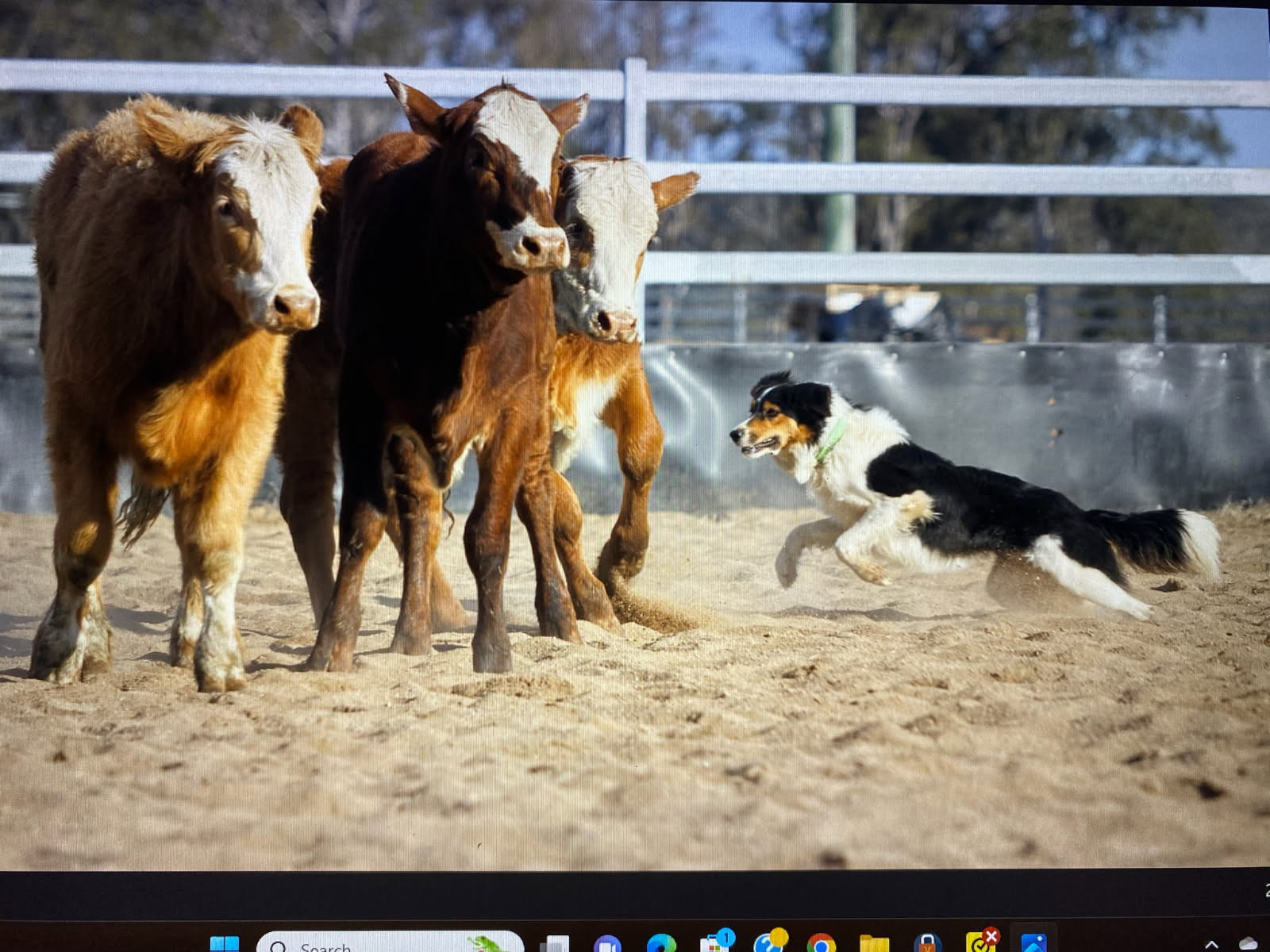
The inaugural cattle dog trial in Australia took place at the Bonalbo Show in May 1950. This event marked the first time such a trial was held at an agricultural show in the country. The competition involved three weaner calves navigating a series of obstacles, with the dogs, guided by their owners on horseback, tasked with directing the calves through these challenges.
The trial was won by Bob Taylor from Old Bonalbo and his dog, Ginger—a three-year-old male brown kelpie. At the time, Ginger was valued at approximately £100, which would be equivalent to about $5,000 today.
The success of this event led to the establishment of cattle dog trials as a regular feature at the Bonalbo Show, and the sport has since expanded nationally, culminating in the formation of the Australian Working Cattle Dog Trial Association.
Following the inaugural cattle dog trial at Bonalbo in 1950, the event sparked a significant movement in the recognition and celebration of working stock dogs across Australia. The success of the first trial, where Bob Taylor and his dog, Ginger, claimed victory, inspired many farmers and enthusiasts to embrace the sport.
As the years passed, cattle dog trials became a regular feature at agricultural shows not only in Bonalbo but across the country. This growing interest led to more structured competitions and the refinement of the rules surrounding the events. What began as an informal showcase soon turned into a respected sport that tested the skills of both the dogs and their handlers.
By the 1960s, the popularity of the trials led to the formation of various regional and state-based cattle dog associations, culminating in the establishment of the Australian Working Cattle Dog Trial Association (AWCDTA) in the early 1970s. This national body played a pivotal role in standardizing the rules for competitions and in organizing larger events, which drew participants from all corners of the country.
The working cattle dog became a symbol of Australian rural life, admired for its intelligence, agility, and bond with its handler. The trials, initially focused on basic stock handling and obedience, evolved to showcase more complex maneuversmanoeuvres. As the sport gained momentum, breeders began focusing on producing dogs with exceptional natural ability, resulting in the development of specialized bloodlines.
In parallel, cattle dog trials contributed to the preservation of traditional farming techniques. As the sport continued to grow, many farmers saw it as a way to improve their working dogs, ensuring they remained highly skilled in the essential tasks of herding and managing cattle. This connection between the trials and practical farming ensured that the sport never lost touch with its roots.
Today, cattle dog trials are not only a celebration of the dogs’ capabilities but also a community event that fosters camaraderie among participants, many of whom come from farming backgrounds. The Bonalbo event, where it all began, continues to be a highlight in the agricultural calendar, reminding people of the important role that working dogs play in Australian farming history.
The sport's evolution has also led to the creation of prestigious national championships, with top dogs and handlers from all over Australia vying for the title of national champion. The trials have also inspired similar events overseas, notably in countries with significant livestock industries, where Australian cattle dogs are highly regarded.
Through the years, the legacy of the Bonalbo trial remains a central part of Australia's agricultural heritage, symbolizing the enduring bond between working dogs, their handlers, and the land.
Copyright 2021 - Privacy Policy